Showing posts with label Banana Facts. Show all posts

Friday, June 22, 2012

[Pictures] How to Ripen Bananas on the Stalk?

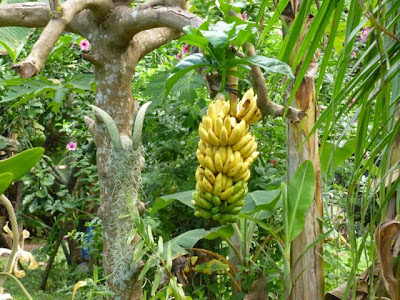
The art of harvesting your own homegrown bananas is in recognizing when then time is right to cut the stalk. Harvesting green bananas too soon produces fruits of smaller size and inferior flavor with a slower ripening time. Cut the stalk when the ridges on each banana of the last bunch of fruit become flatter and rounded, indicating that they are mature. This guarantees the finest, sweetest flavor and texture for your delectable fruit. Final ripening on the stalk is easy to do, and you can manage the process to extend enjoyment of the fruit for about two weeks.
Ripen Bananas, Bananas on the Stalk, Bananas, How to Ripen Bananas on the Stalk, Banana Facts, Banana's Nutriton, pictures of ripening banana stalks

Ripen Bananas, Bananas on the Stalk, Bananas, How to Ripen Bananas on the Stalk, Banana Facts, Banana's Nutriton, pictures of ripening banana stalks

Ripen Bananas, Bananas on the Stalk, Bananas, How to Ripen Bananas on the Stalk, Banana Facts, Banana's Nutriton, pictures of ripening banana stalks

Ripen Bananas, Bananas on the Stalk, Bananas, How to Ripen Bananas on the Stalk, Banana Facts, Banana's Nutriton, pictures of ripening banana stalks

Ripen Bananas, Bananas on the Stalk, Bananas, How to Ripen Bananas on the Stalk, Banana Facts, Banana's Nutriton, pictures of ripening banana stalks

Ripen Bananas, Bananas on the Stalk, Bananas, How to Ripen Bananas on the Stalk, Banana Facts, Banana's Nutriton, pictures of ripening banana stalks

Ripen Bananas, Bananas on the Stalk, Bananas, How to Ripen Bananas on the Stalk, Banana Facts, Banana's Nutriton, pictures of ripening banana stalks

Source ://www.ehow.com/
»»  read more

Friday, June 15, 2012

Banana's Nutriton - Antioxidants

Antioxidants, Banana's Nutriton, what is Banana's Nutriton, what is nutrition of banana, Banana Facts, How many nutrion banana
Antioxidants are believed to be playing a role in reducing the risk of succumbing to early disease, such as heart disease, and some cancers (1).

Antioxidants, Banana's Nutriton, what is Banana's Nutriton, what is nutrition of banana, Banana Facts, How many nutrion banana It is thought that antioxidants absorb and neutralise dangerous free-radicals, factors that seem to cause the body to ‘oxidise’, or age, quickly. Although the body produces antioxidants of its own, it seems to benefit from the extra antioxidants provided in the diet, especially from whole grains, vegetables, mushrooms and fruits. This is still an emerging science, but the evidence suggests that the banana is a key player in keeping us healthy. Two published research papers confirmed that bananas have significant antioxidant power. One study showed that bananas reduced the oxidative stress in the blood and reduced the ability of LDL cholesterol (bad cholesterol) to be damaging (2).
Antioxidants, Banana's Nutriton, what is Banana's Nutriton, what is nutrition of banana, Banana Facts, How many nutrion banana The prevailing view is that oxidised LDL plays a major role in the formation of plaques that tend to clog the arteries and lead to heart disease, so anything that reduces this risk is good news. Another study showed the antioxidant compounds in bananas helped protect nerve cells, which in turn could help protect the brain from Alzheimer’s Disease (3). Eating bananas also seems to help the body increase its own antioxidant production to keep it healthy (4). Apart from their natural antioxidants, bananas contain other compounds called lectins, which have been strongly linked to a reduction in the risk of cancer and potentially helpful in the treatment of cancer (5).
Antioxidants, Banana's Nutriton, what is Banana's Nutriton, what is nutrition of banana, Banana Facts, How many nutrion bananaPlant lectins are known to resist digestion and enter the blood stream intact. They can affect the growth and proliferation of cancer cells, and even cause their ultimate death. Research on 61,000 Swedish women found that, of all the fruits, bananas gave the greatest protection against renal cancer (6). Although all fruits and vegetables helped lower renal cancer risk, it was the banana that stood out. Women eating five bananas a week nearly halved their risk of renal cancer. No-one is sure why this is so, but it may be that the antioxidants and lectins in bananas are exerting an influence.


Source:http://www.australianbananas.com.au/
»»  read more

Saturday, June 9, 2012

[Banana Facts] How To Ripening Bananas???

Bananas, Ripening Bananas, Ripening, How To Ripening Bananas, Banana Facts, Ripening Banana, Ripen Banana
Bananas are transported at around 15 degrees Celsius to maintain their “hard green” status en route to the warehouses and ripening facilities.

Bananas, Ripening Bananas, Ripening, How To Ripening Bananas, Banana Facts, Ripening Banana, Ripen Banana


 Once the bananas have passed the quality assurance process, they then go into a ripening room for conditioning to a customers’ specific colour requirement.
Bananas, Ripening Bananas, Ripening, How To Ripening Bananas, Banana Facts, Ripening Banana, Ripen Banana
 Banana cartons are stacked on pallets inside the ripening rooms to allow good airflow and consistent temperature within the room.
 Ripening rooms which look more like a cool rooms, create a controlled environment that replicates the climatic conditions (heat and humidity) where the bananas were grown and would have ripened naturally on the plant if not harvested. Heating the air in these rooms (to around 17 degrees Celsius) causes the bananas start to respire.
Bananas, Ripening Bananas, Ripening, How To Ripening Bananas, Banana Facts, Ripening Banana, Ripen Banana
The combination of warm air and the introduction of ethylene, (the gas bananas and other fruits naturally give off as they ripen) starts the ripening process. As they respire, the pores in their skin open up and the flesh gets softer until they turn towards a yellow colour.
Bananas, Ripening Bananas, Ripening, How To Ripening Bananas, Banana Facts, Ripening Banana, Ripen Banana
This ripening process continues over the next 6-7 days. The temperature during this period will determine the end colour stage the bananas are ripened to. As bananas ripen, they give off significant quantities of ethylene, a natural ripening agent. You can experiment yourself by placing a banana inside a brown paper bag with a hard avocado. Ethylene from the banana will speed up the ripening process for the avocado.

Bananas, Ripening Bananas, Ripening, How To Ripening Bananas, Banana Facts, Ripening Banana, Ripen Banana
 The ethylene bananas give off naturally when ripening is the same ethylene that is used in ripening rooms. During the ripening process, the temperature of the pulp is not allowed to rise too high (above 18 degrees Celsius) or too low (below 13 degrees Celsius).
Bananas, Ripening Bananas, Ripening, How To Ripening Bananas, Banana Facts, Ripening Banana, Ripen Banana
If the pulp temperature gets too high, the bananas become too soft, and if the temperature falls too low, the bananas become chilled and go off in colour. Once the bananas are ripened it’s off to the selling floors of the wholesale markets.
Source;australianbananas.com.au
»»  read more

[Packing] How to paking bananas ?

Bananas were originally marketed in bunches and the leaves were used as padding to minimise the marking and bruising in transit to markets. In the early 1900s wood cases were introduced, with all of the bananas packed as single fingers, and weighing around 45 kgs.

paking bananas, paking, How to paking bananas, How to harvest bananas, harvest Bananas, Banana Facts, Bananas
Eventually the wooden crates were replaced by the cardboard cartons we still see used today. Once the trailers of newly harvested bunches reach the packing shed, either the top of the trailer, which is demountable, is slid onto a rail like system and pushed into the shed, or the trailer is reversed into the shed Bunches are then lifted onto an overhead conveyor system using an air ram for easier lifting for the operator. Bunches generally weigh around 35-50kgs and each day an operator may lift up to 500 bunches. The bags are removed to be recycled and used for upcoming crops.
paking bananas, paking, How to paking bananas, How to harvest bananas, harvest Bananas, Banana Facts, Bananas

 The overhead gantry system then takes the bunches through a high pressure wash to clean the fruit. Next the hands of bananas are removed from the bunch stem in a process called “dehanding”. A special thin, straight bladed dehanding knife is used to remove the hands, which each contain from around 25 to 30 individual bananas or finger from the bunch stalks. Care is taken at all of the above processes to ensure any “passengers” that come into the shed, especially green tree frogs and tree snakes which like to live in the bunches are not harmed and returned to the plantation.
paking bananas, paking, How to paking bananas, How to harvest bananas, harvest Bananas, Banana Facts, Bananas

Occasionally, some of these passengers do manage to make a long trip to markets, where they are retrieved and sent to local zoos, or returned to the farm from which they came. After the hands have been removed, they are cut into clusters of between 3 and 9 individual bananas, to make it easier for retailers and consumers further down the supply chain.

paking bananas, paking, How to paking bananas, How to harvest bananas, harvest Bananas, Banana Facts, Bananas
It is these clusters that you would be used to seeing at your local retailers. Once cut from the bunch into clusters, the bananas are placed into a fresh water wash tank, or placed onto a packing wheel, for further cleaning, removing of excess sap. After the wash, and before bananas get to the packing station they are placed onto a conveyer belt where they are graded, sized and sorted to remove any with deformities, blemishes, cuts, bruises or marks that render them unmarketable. This conveyor belt will take the clusters to the packing stations.

paking bananas, paking, How to paking bananas, How to harvest bananas, harvest Bananas, Banana Facts, Bananas
 The rejected bananas are put on another conveyor belt and will either become stock feed or be chopped up to be reused as plantation fertiliser. At the end of the conveyor belts are the packing stations, where packers place clusters into banana cartons in preparation for journey to markets. The two most common grades or sizes of bananas are “Large “and “Extra Large”. During the packing process a plastic carton liner is first placed in the bottom of the carton which lines the whole carton.
paking bananas, paking, How to paking bananas, How to harvest bananas, harvest Bananas, Banana Facts, Bananas

Next a sheet of paper is put into the carton to draw away any more moisture. After one layer of bananas has been put into a row down the centre of the carton, a plastic slip sheet is placed over this fruit. This will protect these bananas from rubbing, therefore preventing bruising each other during transport to markets. Two more layers of bananas are then placed into the carton. These two layers are placed in opposite directions to ensure a snug fit inside the carton which will minimise transportation rubbing and subsequent marking of the bananas. The fully packed banana cartons weigh a minimum of 13 kilograms net. Over 20 million of these cartons are packed in Australia each year.
paking bananas, paking, How to paking bananas, How to harvest bananas, harvest Bananas, Banana Facts, Bananas

 After packing the boxes are moved on a conveyor belt to a palletising station where they are placed onto pallets ready for transport to market. Hydraulic lifts assist these workers so that the transfer of the bananas from the conveyor belt to the pallets is always at the same level as the belt. Glue is used to stabilise each layer of the cartons as they are placed onto the pallet, and the top layers are strapped to assist transfer by forklifts. From the palletising station the pallets are then placed in cool rooms to bring the temperature of the bananas down to 14-16°, which is the temperature they will be transported at in their journey to the market.
»»  read more

[Picking] Harvesting a banana crop

How to Harvesting a banana, picking bananas, Bananas, bananas crop, Banana Facts, banana season, time to picking banana
Harvesting a banana crop is the perfect job if you like working outdoors, enjoy physical work and don’t mind getting very wet, very often, during the wet season from November to March. During the dry season from April to October the weather for pickers is much better.

How to Harvesting a banana, picking bananas, Bananas, bananas crop, Banana Facts, banana season, time to picking banana

 Picking crews of around 4-6 strong fit people, take a tractor, with a special trailer, between the rows of bananas looking for mature bunches. The trailer is specially designed to give the newly harvested bunches of bananas as much protection as possible from bruising and consequent markings. Padding is used to prevent this type of damage happening.

 Different coloured bunch covers are used to assist the pickers. At any time they will be predominantly looking for bags with the same coloured stripes. Firstly it’s a quick check under the bag to ensure the bunch is at the correct level of maturity.

How to Harvesting a banana, picking bananas, Bananas, bananas crop, Banana Facts, banana season, time to picking bananaHow to Harvesting a banana, picking bananas, Bananas, bananas crop, Banana Facts, banana season, time to picking banana
 Secondly, two members of a team will work together to pick the bunch from the banana plant One will pull the bunch towards their shoulder, to hold it and the other will put a nick in the stem of the plant. This allows the plant to be bent over, so the bunch can rest fully on the picker’s shoulder. Then a swift slash with a machete removes the bunch from the plant and it is loaded on the trailer between the padded sheets to protect the fruit.

How to Harvesting a banana, picking bananas, Bananas, bananas crop, Banana Facts, banana season, time to picking banana
 Much care and attention is shown during the harvesting process. It’s velvet glove treatment all the way from here. Taking care during banana picking is a constant challenge, considering these bunches generally weigh around 35 to 50 kilograms. Note that much heavier bunches have been recorded, with the world record in excess of 100 kilograms.
How to Harvesting a banana, picking bananas, Bananas, bananas crop, Banana Facts, banana season, time to picking banana
 As each plant stem only produces one bunch, once that bunch is harvested, the stem of the parent plant is chopped down and becomes organic matter for the next crop. The follower (sucker), which is already partially grown becomes the new parent plant, which will produce the next bunch in 8-12 months time. Meanwhile the harvested bunches are on their way to the packing shed where there are many more hands to help get these bananas into your fruit bowl.
»»  read more

Banana Trivia -Bananas have a curious way of capturing everyone’s imagination...

Banana Trivia, Bananas, A curious way, imagination, Bananas, Banana Facts, Eating Bananas
Bananas have a curious way of capturing everyone’s imagination. They can really play on your mind if you have a sense of humour, a bent for the extraordinary or a passion for trivia. This is the section to delve into for all those weird and wonderful facts about bananas, fun stories from around the world. In the United States town of Council Bluffs in Iowa, it was against the law to sell bananas without warning the buyer on the dangers of casting the peels on the footpath. Bananas are grown Iceland.

Banana Trivia, Bananas, A curious way, imagination, Bananas, Banana Facts, Eating Bananas


The fruit is grown in greenhouses heated by water pumped up from volcanic underground springs. Angel Castro, Father of Fidel Castro, was a banana plantation owner. When young, Fidel tended the bananas on his father’s 10,000 acre estate.

Banana Trivia, Bananas, A curious way, imagination, Bananas, Banana Facts, Eating Bananas
 The sap of the fe’i banana is a reddish colour and was once used by missionaries to make copies of the Bible by dipping bamboo pens in the red sap. In the former Belgian Congo European soldiers during colonial times used the sap from the banana plant to heal wounds made by arrows of the natives.

Banana Trivia, Bananas, A curious way, imagination, Bananas, Banana Facts, Eating Bananas
 A half eaten banana was sold on the Internet auction site Ebay for US$2500, with the money going to charity. The other half of the banana was eaten by a British television presenter. The successful bidder was a United Kingdom stockbroker.

 In the 17th and 18th centuries it was considered bad luck to carry bananas on board a sailing ship. Back then, ships undertaking transatlantic crossings would stop at tropical islands to replenish their provisions of food and water.

Banana Trivia, Bananas, A curious way, imagination, Bananas, Banana Facts, Eating Bananas
 Passengers and crew would purchase wooden crates of bananas from the locals and bring them abroad. These crates often harboured bugs, spiders, vermin and snakes that would make their way into the bilges of the ships, multiply, and then find their way into the captains’ quarters. It is believed the captains circulated rumours that bananas were bad luck in an attempt to keep unwanted exotics off the ship.
Banana Trivia, Bananas, A curious way, imagination, Bananas, Banana Facts, Eating BananasBanana Trivia, Bananas, A curious way, imagination, Bananas, Banana Facts, Eating Bananas

 An urban myth propagated by those opposed to the formation of the European Union is that the European Commission had decreed that bananas destined for the European market must be straight, not curved as nature intended. This myth originates from one aspect of EU Regulation 2257/94 that states that ‘bananas must be free from malformation or excessive curvature of the fingers”.

Banana Trivia, Bananas, A curious way, imagination, Bananas, Banana Facts, Eating Bananas
In fact the European Commission was asked by national agriculture ministers and the banana industry to draft legislation to establish uniform banana quality standards, and did so after extensive consultation with the industry. There are in excess of 500 banana varieties in the world. They come in all shapes and sizes, from small finger fruits to purple plantains. Bananas are harvested green because they keep ripening even after they are picked. Unlike most other fruits that grow on trees, bananas grow on plants. The phrase 'going bananas' was first recorded in the Oxford English Dictionary, and is linked to the fruit's 'comic' connections with monkeys.
Source:australianbananas.com.au
»»  read more